USA-250

Lisburn’s American Cousins

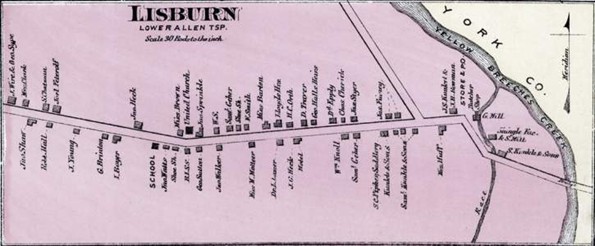
This blog is by Josie Darkins, an intern studying MA Public History at Queen’s University Belfast. Did you know there are more Lisburns in America than in Ireland? There is another Lisburn in the Lower Allen Township of Cumberland County, Pennsylvania. Its origins can be traced to 1739 when a small hamlet began to grow

Lisburn’s American Cousins Read More »

Mulholland in Lisburn: A Hero’s Return

This blog is by Josie Darkins, an intern studying MA Public History at Queen’s University Belfast. Civil War General, St Clair Mulholland (1839-1910) was born in Lisburn to canal-barge owning father, Henry Mulholland (1796-1856), and merchant’s daughter, Georgina Hester Agnes Sinclaire (b.1803). His family emigrated to Philadelphia in 1850 where St Clair found a talent

Mulholland in Lisburn: A Hero’s Return Read More »

‘A Distinguished Ulsterman’ – St Clair Mulholland: the American Civil War Colonel from Lisburn

Bridge Street has been one of Lisburn’s most important areas going right back to its earliest times. The street’s close proximity to the Lagan was vital in its development, including the growth of the gasworks, covered in an earlier Virtual Museum post. Besides functioning as the town’s engine room, Bridge Street also produced a number

‘A Distinguished Ulsterman’ – St Clair Mulholland: the American Civil War Colonel from Lisburn Read More »

Frederick Douglass and Lisburn

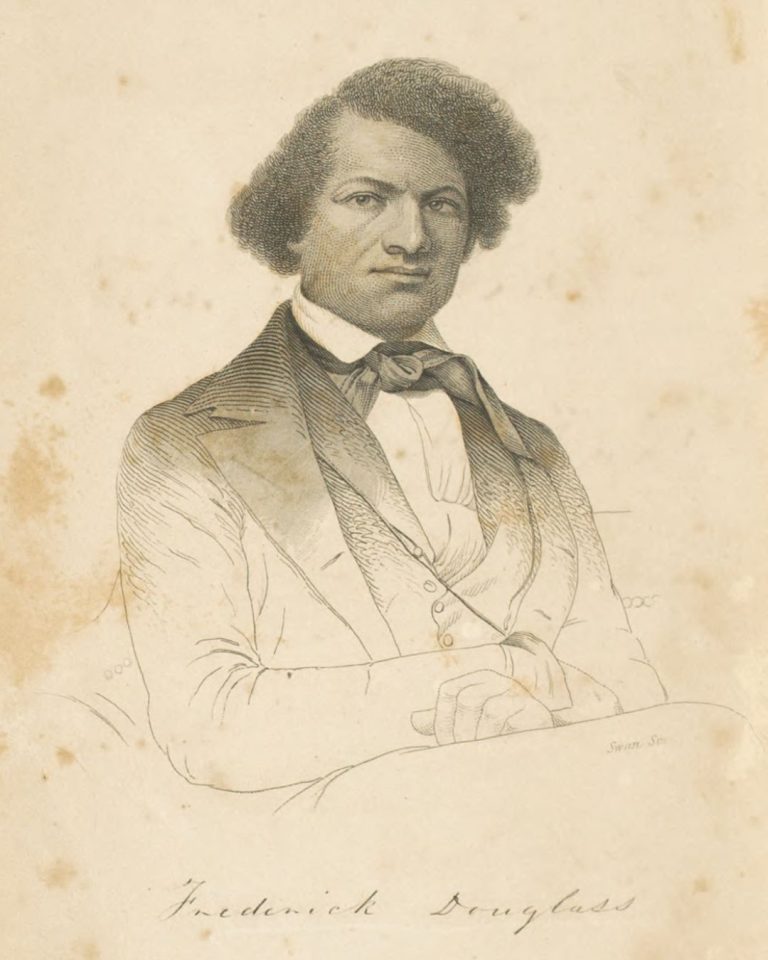
Frederick Douglass (1818-95) was born into American slavery but escaped to tell his story and became a leader of the abolitionist movement. Did you know that the most photographed American man of the 19th century visited Lisburn? Lisburn had its own small, but committed anti-slavery movement active from the late 1700s. Douglass spoke in 1st

Frederick Douglass and Lisburn Read More »

Chapman - photo

George Chapman Sinton (1886-1976): from Lisburn ‘Old Scholar’ to US presidential elector

Thomas E. Dewey, Governor of New York and Republican presidential nominee, admiring Sinton’s tie at the Republican National Convention in Philadelphia, PA, 1948. (FSL, Past and Present, 1948) Around the time of US presidential elections, there is always a lot of talk about the so-called ‘Electoral College’ in determining the winner. This is the group

George Chapman Sinton (1886-1976): from Lisburn ‘Old Scholar’ to US presidential elector Read More »

Mary Edson photo

A poem for the Mary Edson, 1863

Model of the Mary Edson, by Werner Geyer, 2023 (ILC&LM Collection) The following poem was written by William McComb (1793-1873) on 13 July 1863, the date that the Mary Edson departed Belfast for New York. The ship was sent by Lisburn-born American millionaire, A. T. Stewart (1803-76), and on the return leg to the USA

A poem for the Mary Edson, 1863 Read More »

Stewart residence photo

Lisburn cotton weavers’ address to A. T. Stewart, 1863

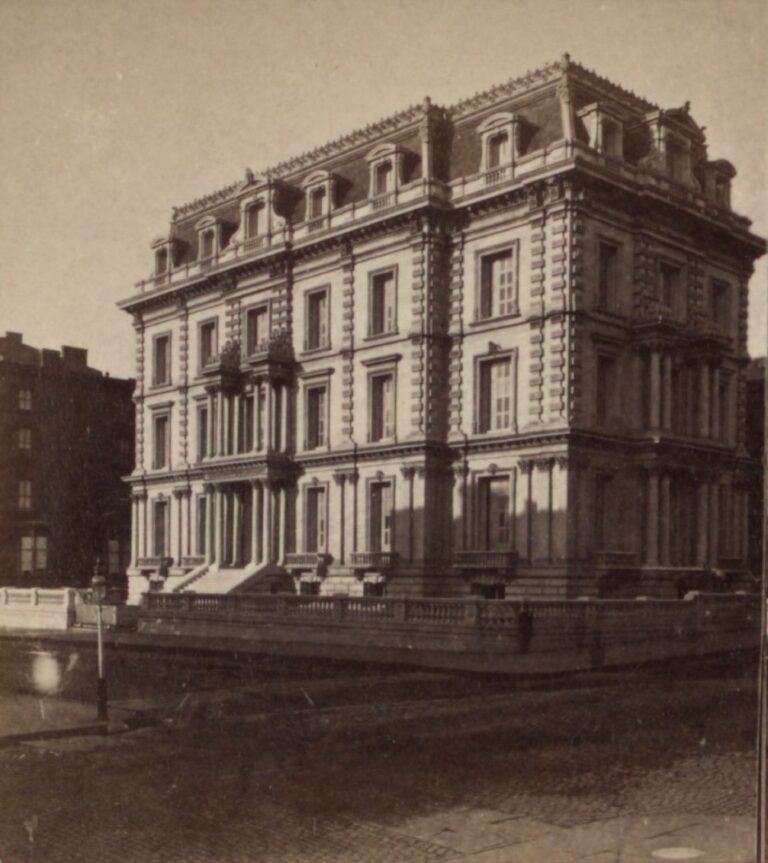
A. T. Stewart’s residence, Fifth Avenue and 34th Street, Manhattan, New York, c. 1900 (Image credit: New York Public Library) The cotton famine of 1861-3 was devastating for many Lisburn families, with the cotton weavers unable to source the material on which their livelihood depended. The Lisburn-born American millionaire, Alexander Turney Stewart (1803-76), felt compassion

Lisburn cotton weavers’ address to A. T. Stewart, 1863 Read More »

The Lisburn cotton famine and Moby-Dick

What connects a gold watch from our collection and the classic novel, Moby-Dick? During the devastating ‘cotton famine’ of 1861-5, when American Civil War disturbances blocked cotton shipments to Ireland, Lisburn’s cotton weavers faced destitution. A relief fund was established to aid those workers and attracted many significant donations, including from one of America’s wealthiest

The Lisburn cotton famine and Moby-Dick Read More »

Scroll to Top