About the Collection
Discover the story of Lisburn and the Irish linen industry through our amazing collections.
The history of the collection:
Lisburn Museum was established in 1979 and focused on collecting objects related to the history and heritage of Lisburn, and the wider Lagan Valley. Given the area’s rich linen heritage, the museum expanded in 1994, and added the Irish Linen Centre.
Approximately half of the total collection relates to the linen industry, and include:
Textiles
Major Irish linen damask collection, particularly relating to the Coulson family; and tablecloths, napkins, napery and other household linens. Needle-worked textiles, including samplers and quilts (19-21st century). Linen costume, 18-21st century.
Non-Textiles
General artefacts of linen production, illustrating the how, what, who and where of the industry in the domestic and mechanised stages of manufacture. These include working damask and cambric hand looms, a collection related to thread manufacture, advertising materials, prints, drawings, portraits and photographs. Particular emphasis within the collections is given to linen manufacturing firms and families associated with the Lisburn and Lagan Valley area. These include Barbour (thread manufacture), Richardson (linen manufacture and bleaching), Coulson (damask linen production).
Highlights include:
- Lisburn Historical Society Collection, including linen manufacturing tools
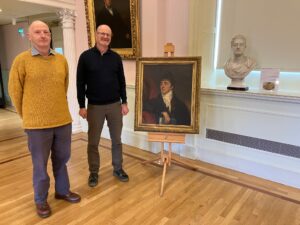
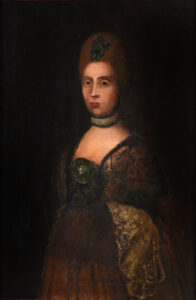
- Linen-related paintings, including portraits of the linen barons, 19-20th century
- Robinson & Cleaver collection
- Jacquard point papers, 19-20th century
- Liddel-Ewart glass photographic plates, 20th-century
Artefacts relating to Lisburn and the Lagan Valley, include:
Art Collection
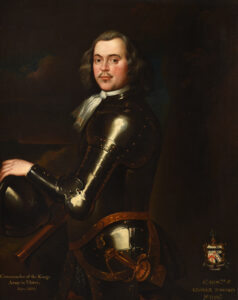
The collection includes prints, drawings, watercolours and oils of local topographical views, portraits and general works by local artists. There is a particularly fine collection of paintings by Lisburn-born artist, Samuel McCloy (1831-1904). The Museum is developing a notable collection of paintings relating to the River Lagan as well as those by local artists in general, particularly where these have an association with the linen industry. On permanent display is a painting by John Luke (1906-1975), The Locks at Edenderry, which was acquired with grant aid from the Heritage Lottery Fund, or work on the Rawdon family.
Local and Social History of the Lagan Valley
Artefacts relating to local crafts, trades, domestic life, civic life, costume, transport, sport and military service are collected, covering a period from the mid-17th century to the present day. In 2000, the collections of Lisburn Historical Society were incorporated into the collection.
Archaeological and Natural Science Collections
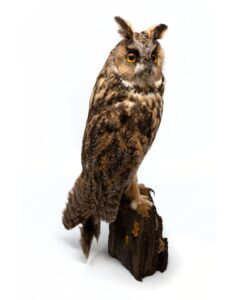
Local prehistory, natural history and geological objects.
Library and archive.
The museum holds a number of libraries, these include:
LIRA Library
The library collection of the Lambeg Industrial Research Association (LIRA) is held by the museum. LIRA was originally founded in 1919 as the Linen Industry Research Association and the library collection reflects its research work into a range of aspects of flax and linen production. It closed in 1993. The library comprises over 6000 books, journals and research reports. Most of the material was published between 1900-70, although there are rare books, pamphlets and journals dating from the 18th century.
Reference library
The museum holds a working research library with a large selection relating to the Irish linen industry and its history; Irish textiles and crafts, weaving and design.
Archive and Rare Book library
Archival and rare book holdings relating to 17th-20th-century linen manufacture and history, including the Irish Linen Board; Irish Linen Guild; ulster linen manufacturers, including William Barbour & Sons Ltd.
Photographic Collection
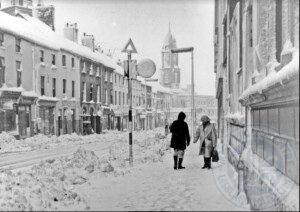
The Museum’s 90,000+ collection of photographs covers all aspects of linen production, since the 1880s, particularly in relation to the businesses which were located in the Lisburn area, and also a number of local topographical views from the wider Lagan Valley Region. Alongside this is archive of local and family history collections, from buildings to people, businesses to events.