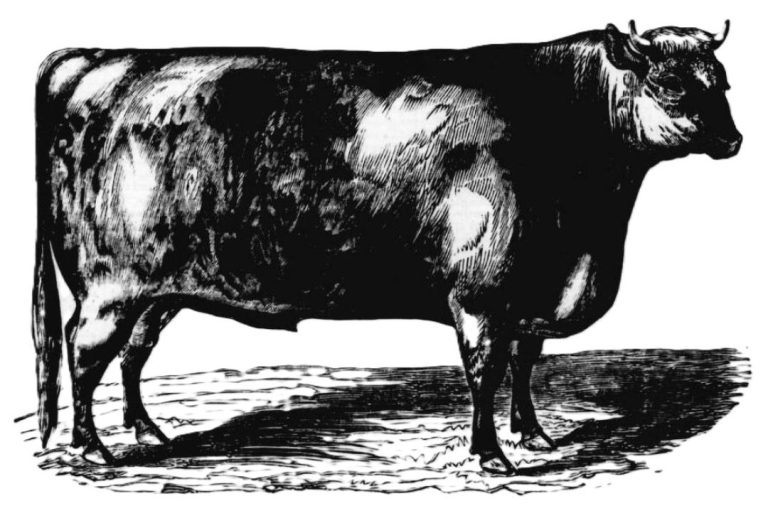
'Soubadar' when he was three years old (Irish Farmers' Gazette and Journal of Practical Horticulture, 2 May 1863)
In the nineteenth century, pedigree livestock was an attractive investment for the aristocracy, landed gentry, and businessmen. These animals were a symbol of the owner’s wealth and status, and by improving the breed, the owner could enhance his reputation and legacy.
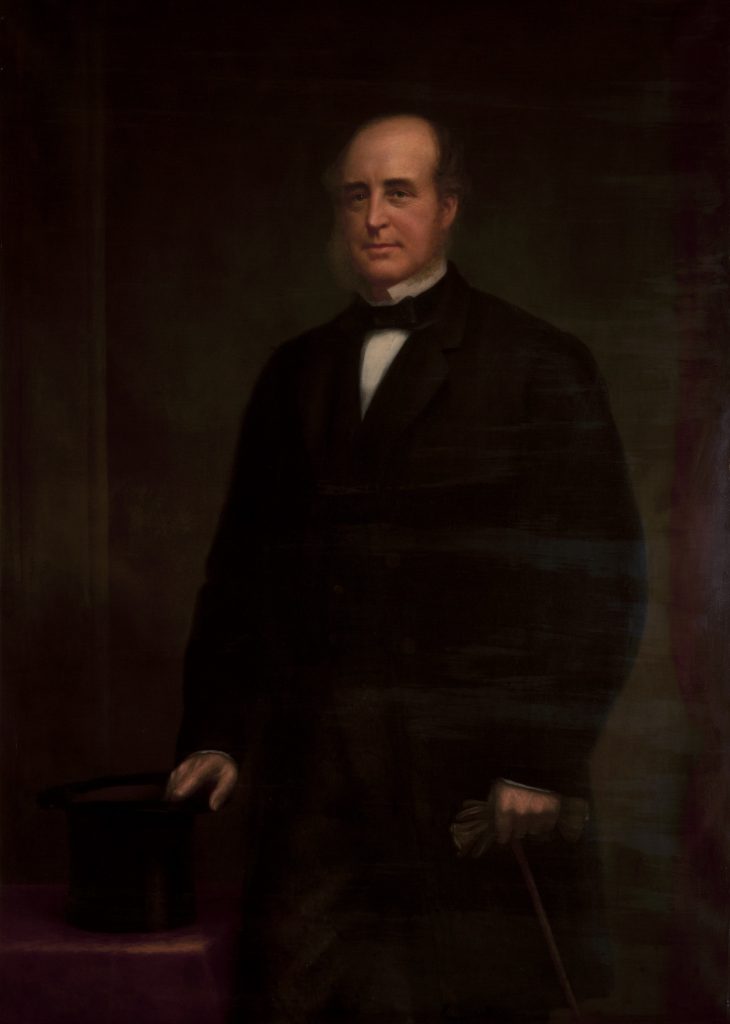
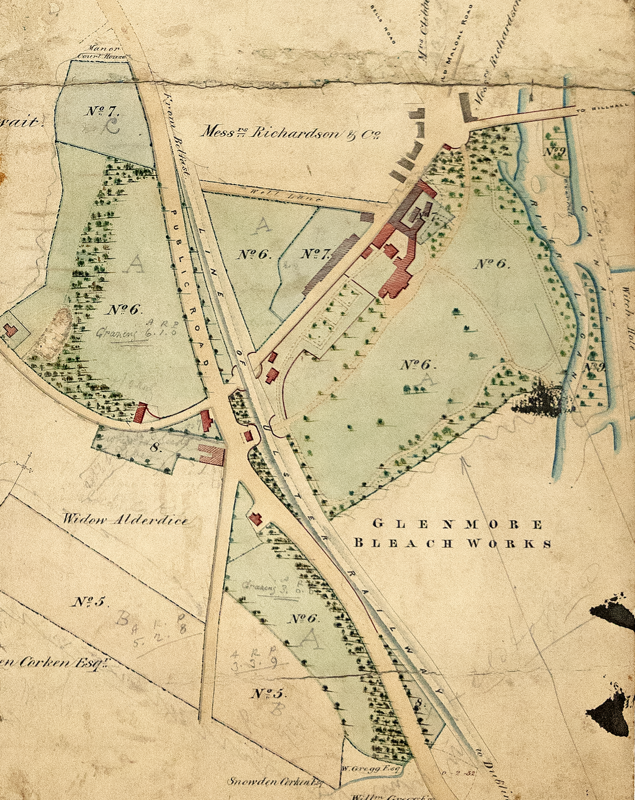
One such person involved in pedigree livestock was Jonathan Richardson (1811-69). He was the eldest son of James Nicholson Richardson (1782-1847), founder of J. N. Richardson, Sons & Owden – a linen manufacturing and bleaching business. Jonathan was a senior partner in his father’s firm, which owned the iconic warehouse in Donegall Place, Belfast (now Marks & Spencer). As well as financial interests in the spinning and weaving enterprise at Bessbrook, near Newry, he owned Glenmore Bleach Green at Lambeg next to his mansion house, ‘Glenmore’. At one stage, the bleach green was reputedly the largest in the world.
Despite his business interests, Richardson preferred the life of a country gentleman at Glenmore. Here, he became a successful breeder of Shorthorn cattle, particularly the famous bull ‘Soubadar’ which was described as ‘one of the best ever bred in Ireland’.
Soubadar was calved at Glenmore on 4 February 1859 and registered with his unique pedigree number: 18,901. Sired by ‘Prince of Warlaby’, his dam was also from the influential ‘Warlaby’ bloodline bred by the Booth family in Durham, England.
In his first show appearance, Soubadar was awarded 1st prize in the yearling class at the Royal Dublin Society’s Show in 1860. He was described as possessing ‘beautiful quality, a capital coat of hair, is very sweet, and full of good points’, and made such an impression that he was bought at the after-show sale by William Coppinger of Cork for £210. This would be worth over £22,000 today!
Soubadar continued his winning streak under his new owner, placing 1st in his class and winning the interbreed championship at the show in 1861.
Jonathan Richardson, 1811-69 (LMILC.1993.149, purchased)
Map of Glenmore, Lambeg, where Soubadar was bred by Jonathan Richardson (LMILC.2001.36, purchased)
Coppinger did not enter him for the Royal Show in 1862, and following his owner’s death, he was purchased by Thomas Butler Jnr. of Tipperary in 1863. Butler did not have much time to prepare the animal for competition, resulting in Soubadar missing out on the top spot at the show of that year, but he returned in 1864 to win his class and the interbreed championship.
However, it was to be one of Soubadar’s last outings in the show ring because he died on 3 October 1864 after a short illness at the young age of five years old. Shorthorn cattle were known for their longevity, living for perhaps 15 to 20 years.
News of his death made the headlines. The Waterford Mail acknowledged that some people regarded his demise as a ‘national misfortune, as he was, if not the best, at least one of the best bulls in the world’. The Irish Farmer’s Gazette wrote that he was ‘a bull of such a rare sort that years may elapse before we meet with another like him’.
A lot of fuss about a bull that once grazed a few fields near Lisburn!