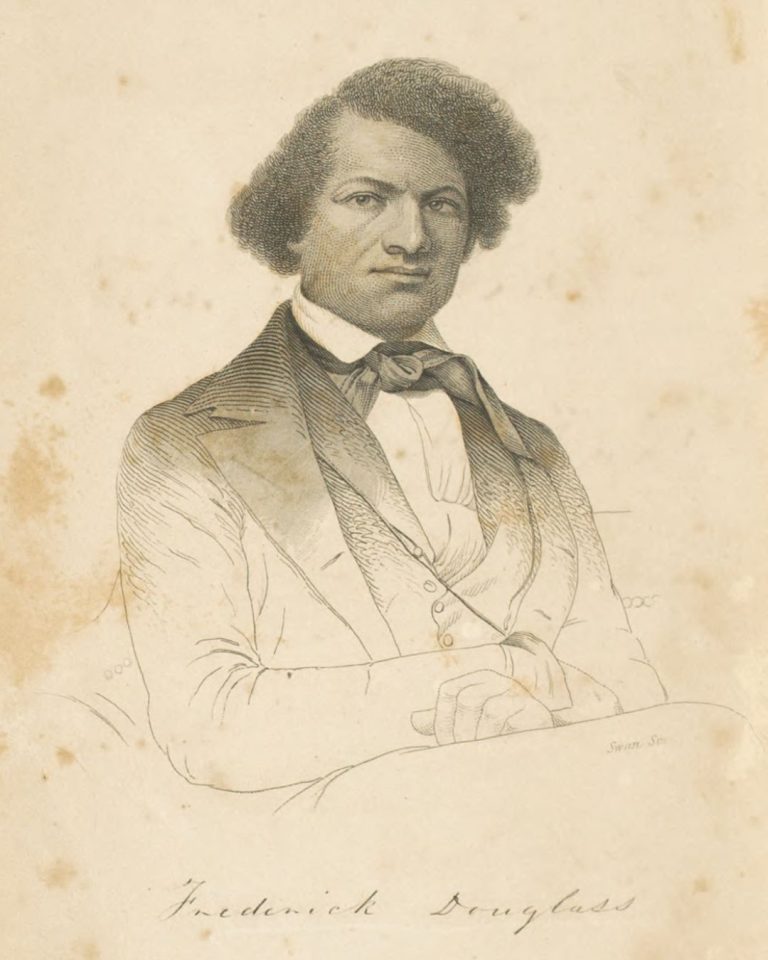
Frederick Douglass, 1818-95 (Narrative of the life of Frederick Douglass, 3rd Irish edition, Dublin, 1845)
Frederick Douglass, 1818-95 (Narrative of the life of Frederick Douglass, 3rd Irish edition, Dublin, 1845)
Frederick Douglass (1818-95) was born into slavery on a plantation near Hillsborough, Maryland, USA. In 1838, he escaped and went on to tell his story, eventually becoming a leader of the abolitionist movement in the United States. Did you know that the most photographed American man of the 19th century visited Lisburn?
His visit was part of a wider tour of the United Kingdom. He fled there to avoid capture as a fugitive slave following the publication of his first autobiography, ‘Narrative of the life of Frederick Douglass’, in 1845.
Douglass landed in Ireland on 31 August 1845. He intended to stay just a few days to publish an Irish edition of his ‘Narrative’. Instead, he remained four months, encouraged by the strong anti-slavery movement and a newfound sense of safety.
He gave almost 50 lectures across the island. A few focused on temperance, a cause close to Douglass, but most were about slavery. He often criticised American churches that upheld slaveholding. Some of them financed the new Free Church of Scotland, which Douglass urged to ‘Send Back the Money’. This sparked controversy in Presbyterian Belfast, where many were sympathetic to the founders of the Free Church.
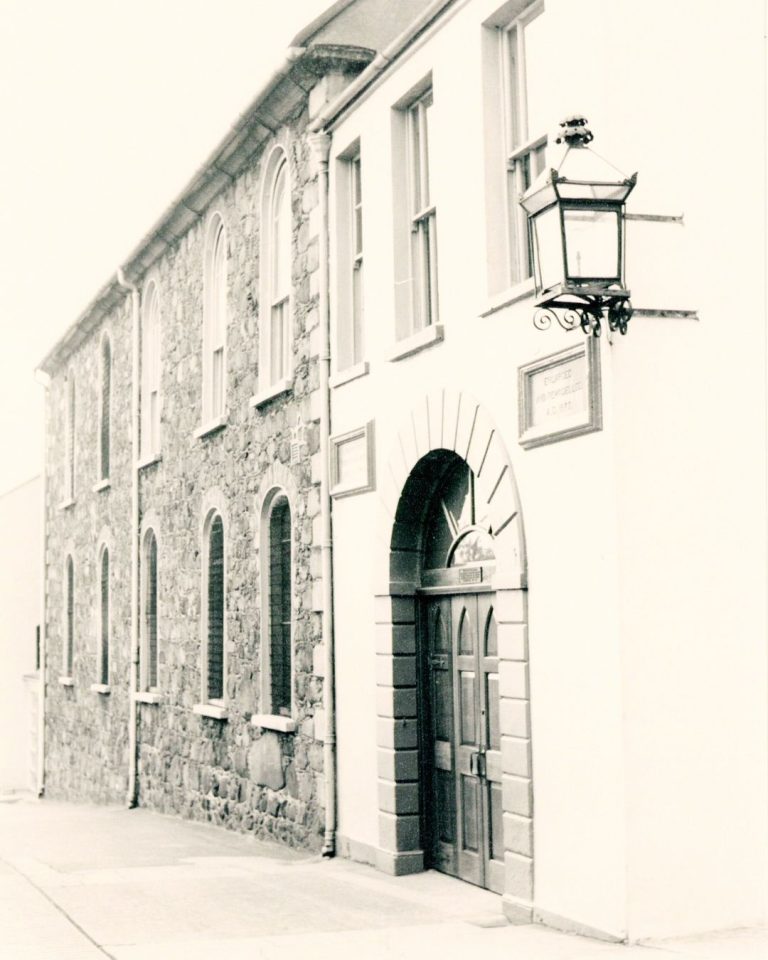
One of the lectures Douglass gave during his tour of Ireland was in 1st Lisburn Presbyterian Church, Market Square, on 29 December 1845. The town had its own small but committed anti-slavery movement active from the late 1700s.
The meeting was chaired by the church’s minister, the Rev. Alexander Henderson. Like Douglass, he was a staunch supporter of temperance and critic of slavery. Henderson welcomed Douglass, and stated that he was sure everyone present ‘had a heart to feel for the oppressed’. Furthermore, he said he knew they would do all they could to ‘have the wrongs of those who were held in cruel bondage redressed’.
Douglass spoke for one and a half hours to a packed audience (the building’s capacity was about 800 people). Outlining the horrors of slavery, which he had experienced first hand, he also drew attention to the unchristian support it received from many churches in America.
Ireland transformed Douglass. He was treated the equal of white men, and found his own voice as an abolitionist. The visit also helped him realise that more people than just American slaves were impacted by social injustice, having witnessed the poverty of those impacted by the Irish potato famine. In total, Douglass toured the United Kingdom for 20 months. By the end of it, he was no longer a fugitive. British and Irish supporters raised $700 (worth £15,000 today) to buy his freedom.
Now a free man, Douglass returned to the USA in 1847. He continued to be a leader the abolitionist cause, and American slavery was eventually abolished in 1865 following the US Civil War (1861-5).