
This blog is by Josie Darkins, an intern studying MA Public History at Queen’s University Belfast.
Did a tense visit to Hillsborough cause the American War of Independence? Probably not, but it certainly didn’t help.
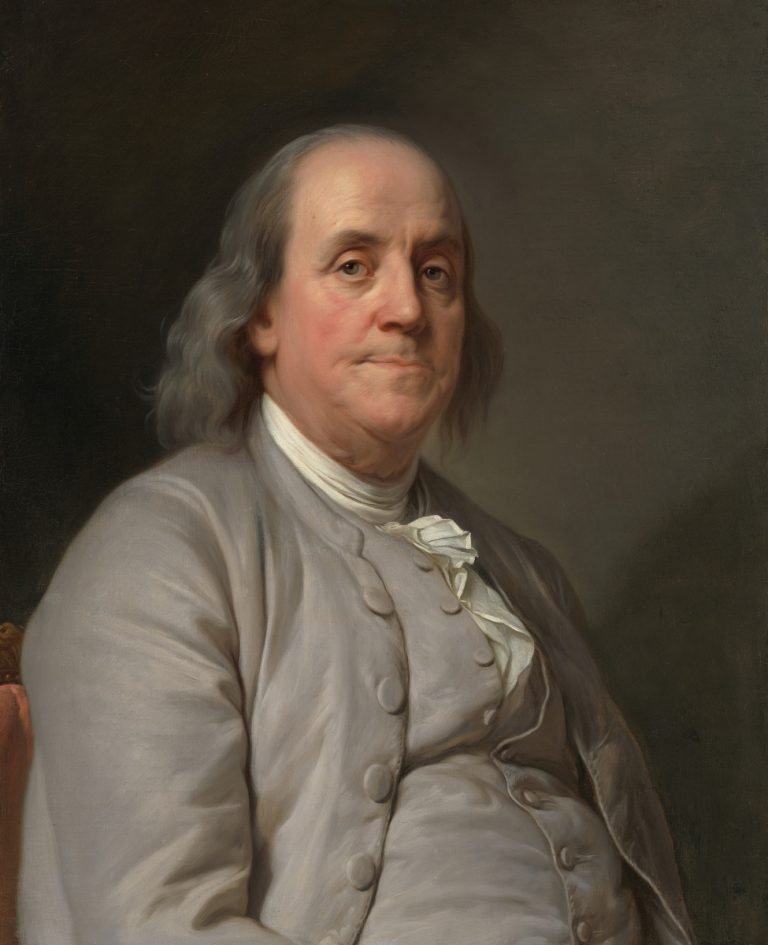
In 1771, soon-to-be American founding father, Benjamin Franklin (1706-90), was visiting Ireland in his capacity as an agent of the American colonies to the British Crown when he ran into Wills Hill (1718-93), Lord Hillsborough, in Dublin. Lord Hillsborough had been appointed Secretary of State for the Colonies in 1768 after unrest surrounding taxation, putting him at loggerheads with Franklin who represented the colonies’ interests. Lord Hillsborough invited Franklin and his travelling companion, Richard Jackson, to his home at Hillsborough, County Down. Franklin described the invitation in a letter to his son as being ‘urged it in such a polite manner, that we could not avoid saying we would wait on him if we went that way’. Jackson agreed as he was a member of the English House of Commons and could not afford to make enemies in London. Franklin said he would drop in if he was going that way, but had no intention, wanting to visit a friend in Armagh instead.
However, Franklin’s detour to Armagh was not to be, as a spare carriage could not be found, forcing him to accompany Jackson to Hillsborough. In Franklin’s own words, ‘There we were detained by a thousand civilities from Tuesday to Sunday’. He had no love for Lord Hillsborough, describing him in a letter to a friend as possessing a character of ‘conceit, wrongheadedness, obstinacy and passion’.
Upon reception, Lord Hillsborough sent his son, Arthur Hill (1753-1801), to take Franklin on a forty-mile circuit to see the countryside. Franklin even reported that Arthur put his own coat around his shoulders to prevent him from catching a cold. In a letter to a friend, he suggested that he could see through the niceties, commenting that the Hills ‘seem’d in every-thing extremely solicitous to impress me, and the colonies thro’ me’. At some point on this excursion, Franklin purchased around £75 worth of Irish linen – possibly from Lisburn – to send back to Philadelphia, as evidenced by his account book.
Lord Hillsborough and Benjamin Franklin represented opposite interests and seemingly could not see eye to eye. After Franklin left, he wrote a letter to his son describing that Lord Hillsborough ‘threw me away as an orange that would yield no more juice and there-for not worth more squeezing’.


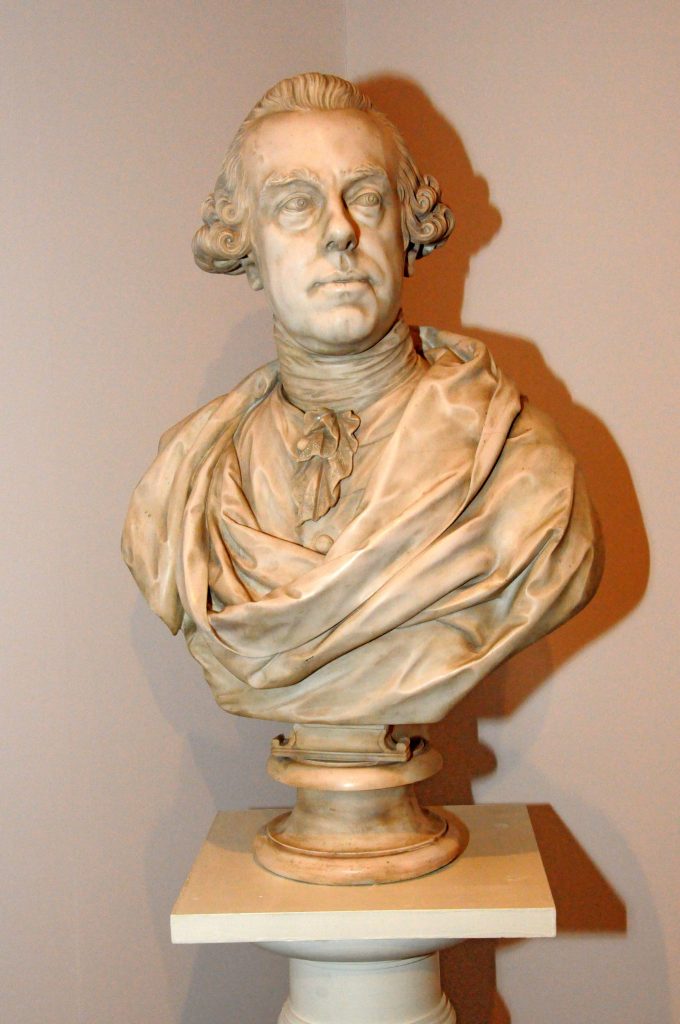
Indeed, the two men never had an amicable exchange after Franklin’s Hillsborough visit. Lord Hillsborough’s excessive hospitality clearly did nothing to persuade Franklin of the colonies’ subordinate position to Great Britain. When Franklin later visited Lord Hillsborough’s London home to thank him for his earlier hospitality, he was not received. Less than a year later, he published a pamphlet entitled ‘On the Conduct of Lord Hillsborough’ which placed much of the responsibility for poorly received British policy in America on Lord Hillsborough’s shoulders. He also celebrated openly when Lord Hillsborough was replaced as Secretary of State for the Colonies in 1772.
Despite the damage to Lord Hillsborough’s reputation in America, many settlements in the US were named ‘Hillsborough’ and ‘Hillsboro’ to acknowledge his position as the first Secretary of State for the Colonies.
If Lord Hillsborough were of a more compromising character, perhaps the fatal break between Great Britain and America might have been avoided – or maybe the two men’s relationship was representative of that between their countries. Relations continued to deteriorate until open warfare broke out, followed by the 13 American colonies declaring their independence in 1776.